Conditions are information, not advice. What's safe depends on your experience, boat and gear.

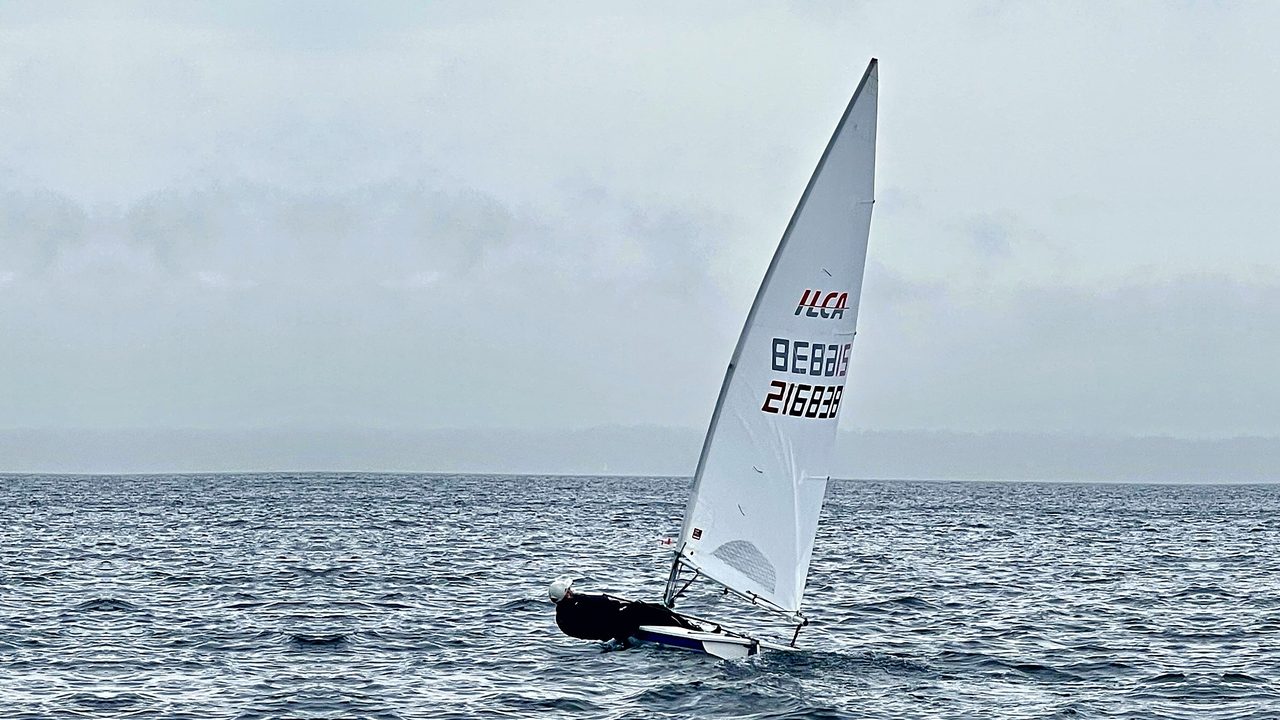
Hiking out hard in ILCA 7 sail 216838 on grey chop in the outer sound

Birch Bay, Washington

Sail Birch Bay

ILCA 7 216838 Birch Bay, WA

The home water

The bay from a Laser

Birch Bay is a laid-back beach town in the farthest northwest corner of Washington, a few miles from the Canadian border. The bay itself is wide, shallow, and crescent-shaped, opening onto the windy Strait of Georgia. At low tide the water pulls far back and leaves huge sandy flats you can walk for what feels like miles, looking for sand dollars, crabs, clams, and tide-pool life. That same shallowness is why the water warms as it floods back in, giving Birch Bay some of the warmest saltwater swimming in the Salish Sea and making it a summer favorite for families, kayakers, and paddleboarders. Clear evenings bring long sunsets over the water with the San Juan and Gulf Islands on the horizon.

Two Lasers and a sloop on Birch Bay

Sailing record

0Sails
0Kilometers
0Hours moving
—Best boat speed, kn

Sails

My most recent sails.

216838 and a red Albacore on Birch Bay
A fleet of Lasers racing upwind, including 216838
Course marks

Pick the kind, Place mark, tap the map. Undo takes back the last pin.

    Zones

    Tap a box to select it, then drag the corners. Or draw a new box / diagonal strip.

      Easter eggs

      Old buoys in odd water. Pin egg, tap the spot, download eggs.json.

        This sail

        Tap a card first. Wind and company stay on that day.

        Also on this sail

        Crab pots

        Select the sail, then pin floats. Crab icon on the map. That day only.

        Select a sail first.

          Race course

          Committee boat and pin end draw the start line. Race marks are the rounding buoys.

          Select a sail first.

            Capsizes

            Select a sail, then pin where it happened. Stays in this browser, like crab pots.

            Select a sail first.

              Strava

              Coros → Strava save, then Sync. Also runs on Netlify every 6 hours.

              Connect once. Then Sync now.

              Achievements

              Challenges I set for myself while sailing Birch Bay.

              Hiking hard at dusk on Birch Bay

              On the bay

              Events

              ILCA (Laser) regattas, series and clinics.

              Rigged ILCAs and Optis on the dock at the Turkey Bowl Regatta 2025
              Turkey Bowl Regatta 2025

              Loading events…

              Know of an event? Leave a note.

              About

              Sailing a Laser on Birch Bay: the boat, tides and wildlife.

              The author at the tiller of an ILCA 7 on Birch Bay

              Why I sail it here

              I sail my Laser out of the Birch Bay Village marina. Small mooring buoys are scattered around, and when the tide is high enough I use them as my own race course—tight roundings, quick tacks, and boat handling without anyone setting marks. Because the bay is so shallow, I’ve learned to heel the boat, lift the daggerboard and rudder a little, and sneak through skinny water that would stop almost any other sailboat. The wind off the Strait is usually steady, and when it builds I get to chase waves and surf them.

              I’m rarely out there alone. The bay is full of sailboats, from dinghies to big keelboats, and sharing the water has connected me with a good group of sailors who’ll swap tips, line up for an impromptu race, or talk at the dock. Other days I just cruise the shoreline: seals popping up, herons on the flats, eagles overhead, sometimes whales, Mount Baker and the islands in the background.

              Heeled hard in spray on Birch Bay, ILCA 7 sail 216838

              What’s a Laser?

              An ILCA—what most sailors still call a Laser—is a 14-foot singlehanded sailing dinghy. One sail, easy to rig, and light enough to drag up a beach. The class is one-design, so every boat is built to the same rule, and races come down to skill rather than gear. Three rig sizes (ILCA 4, 6, and 7) cover everyone from teens to masters sailors, and it’s been an Olympic class boat since 1996. My Laser is sail number 216838, built in 2020, and sailed with the full ILCA 7 rig.

              The author's ILCA 7, sail 216838, rigged on its trailer

              A note for visitors

              What works for me and my Laser may not suit another sailor or another boat. Check the conditions and know your limits.

              On the water here

              Notes from sailing Birch Bay in the Laser. I am still learning it.

              Wind and waves

              • Summer pattern: mornings are often light or glassy, with a sea breeze filling in from the west/northwest by early afternoon, then dwindling off before sunset.
              • Best sailing window: summer afternoons are reliably good; still figuring out the other seasons.
              • Southerlies: storms bring gusty south/southwest winds that can build chop quickly across the bay.
              • Waves: westerlies and southwesterlies have the most fetch and give the best wave-surfing conditions, sometimes with swell rolling in from the Strait on top of the wind chop. The shallow flats can make the waves steep and short.
              • Gusts near shore: wind can get shifty and lumpy close to the bluffs and around the Village, then smooth out farther onto the bay.
              Tides and shallow water

              • A big tidal range. The water typically rises and falls about 9.5 ft (2.9 m) a day, and the biggest tides of the year swing about 15 ft (4.6 m).
              • Low tide sailing is good. It mostly depends on where you put in. I haven't had any trouble getting in or out of the marina; the channel just gets narrower, so it means shorter, tighter tacks.
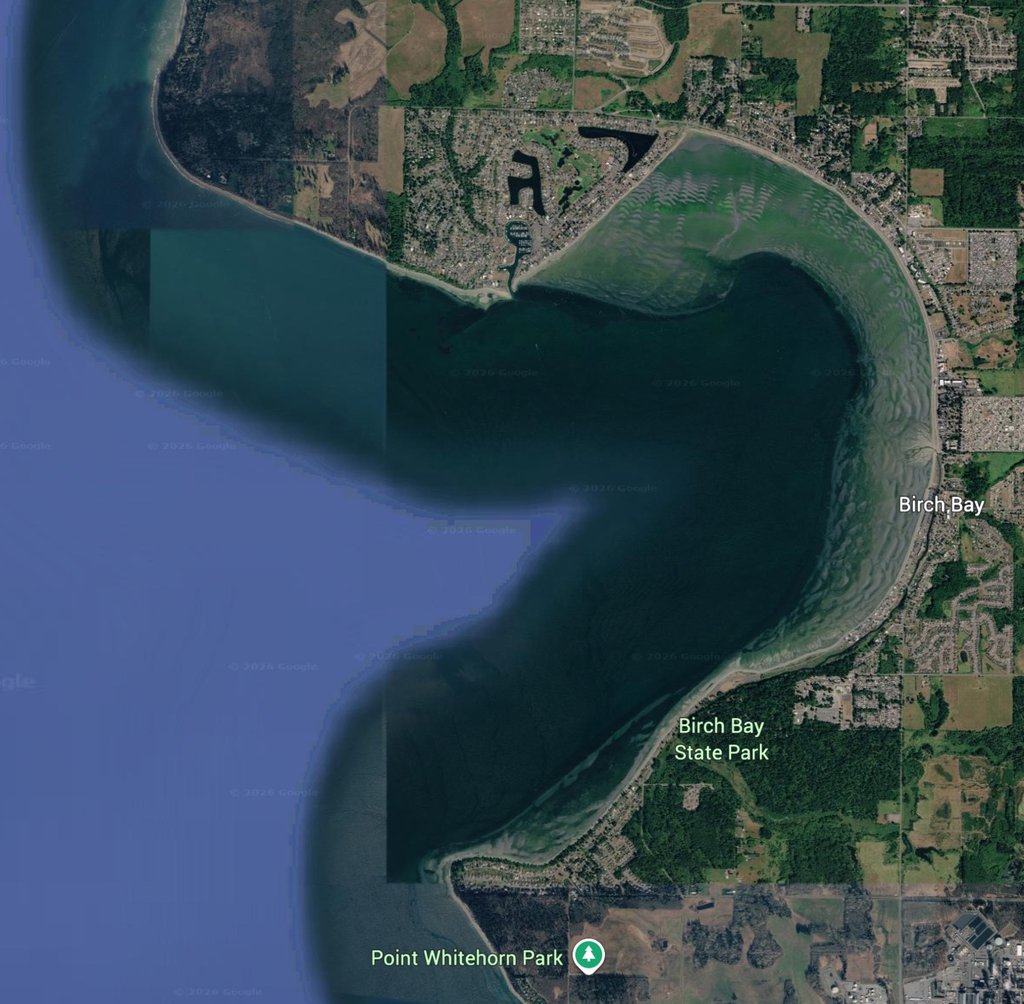
              • The flats are at the east end. The beaches on the inside can be well exposed, but the deeper water out in the bay is still great sailing.
              • Your distance from shore changes a lot. At high tide you can sail as close as 5–10 feet off the beach; at low tide it's about a quarter mile.
              • Draft. Raising the daggerboard lets me get into shallow water, but once it's less than about 20 inches deep (the rudder's draft) I have to heel hard to lift the rudder and keep it off the bottom, down to about 10 inches of water.
              • Soft bottom. It's mostly sand and mud, so touching bottom is usually forgiving, but areas close to shore have rocks.

              Tide times are NOAA predictions for Blaine (station 9449679), a few miles north. Birch Bay runs within minutes of them.

              Satellite view of Birch Bay showing tidal flats along the north and east shore
              Birch Bay from above. The light shallows along the north and east shore are the flats that dry out at low tide. Imagery ©2026 Google

              Where I go

              • Village marina: home base. Tight tacking most of the time to get in and out, with gusty, shifty wind, dead spots, and other boats to dodge.
              • Mooring buoy field: my go-to for challenge courses, tight roundings, and quick tacks, but usually only at higher tides since the moored boats sit on the flats when the tide is out.
              • Crab pot buoys: when crab season is open, the pot floats scattered across the bay all the way out to the Strait make an instant, ever-changing course to weave through.
              • Open bay: where I head when conditions are good, for steady breeze and wave surfing.
              • Shoreline cruising: poking along the beach and town waterfront at high tide, sailing close in to shore.
              • Birch Bay State Park: a destination for crossing the bay to the south end.
              • Breakout into the Strait: heading out past the points into the open Strait of Georgia when I want bigger water.

              Who else is out

              • Other sailors: sailing dinghies and big keelboats heading out from the marina, and friendly crews always up for swapping tips or an impromptu race.
              • Crabbers: small powerboats and skiffs working their pots in season, often stopping suddenly or moving between floats.
              • Fishing boats: usually only out in the deeper water or passing through on their way farther out to sea.
              • Powerboats and jet skis: their wakes make for fun waves to jump or surf.
              • Kayakers and paddleboarders: out in force on calm summer days, mostly close to shore.
              • Swimmers and waders: mostly at the public beaches and state park, especially on warm summer afternoons.

              Wildlife and views

              • Seals and sea lions: often pop up nearby to check out the boat, and sea lions show up in the deeper water or sunbathing on rocks.
              • Whales and porpoises: porpoises are an occasional sighting farther out toward the Strait, with the rare chance of orcas or humpbacks passing through.
              • Bald eagles: cruising overhead or perched in the shoreline trees.
              • Great blue herons: stalking the shallows and flats, especially around the State Park and Terrell Creek.
              • Seabirds and ducks: gulls, cormorants, kingfishers, and rafts of ducks and brant on the bay, with big flocks of shorebirds passing through during migration.
              • Tide flat life: crabs, sand dollars, and clams visible through the clear water when sailing close to the bottom.
              • Mount Baker: over the east shore, on clear days and at sunset.
              • Islands: sweeping across the horizon from the San Juan Islands to Point Roberts and on to the Canadian Gulf Islands.
              • Vancouver and the Coast Mountains: the city skyline and snowy peaks behind it come into view once I get far enough out into the Strait.
              • Sunsets: over the water on the sail back in.

              Notes

              If you sail here or live on the hook, drop a line. I read these.

              Sailing with a Lido 14 lateen rig on Birch Bay

              No notes yet.